|
THE MOST IMPORTANT THING TO REMEMBER IS THE ART HAS THE LOOK AND FEEL OF AN ORIGINAL OIL PAINTING.
Giclée (zhee-clay) is a French term translated as "spray of ink." Giclée prints combine today's advanced computer-controlled printing technology with the artist's personal touch to create the most authentic possible reproduction of the original art.
The original oil painting is scanned, color corrected, approved by the artist and then archived in disc form.
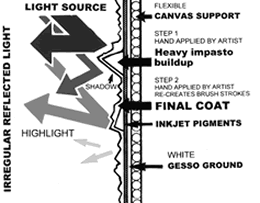
During the printing process, a canvas is hand-mounted to a drum that rotates at a very high speed while a fine spray of ink droplets - one fourth the size of a human hair, are sprayed onto the surface at a rate of one million droplets per second. This allows for an unsurpassed range in depth, color and detail. The largest prints take an hour or more to produce. During the ink application, the surface is treated with an ultraviolet-filtering layer that creates a waterproof, light-fast and durable image ready for the second phase of the Giclée process.
The hand retouching stage adds depth and dimension to the print. This step, done by Michael, requires individual attention to each Giclée. First, a transparent paste is specially applied to add three-dimensional edges with tools that bring out the natural "impasto" effect occurring on the surface of the original art. When the first layer is dry, a second coat of slightly thinner transparent gets applied over the entire canvas, using a stiff brush that leaves both a permanent and unique texture of brush marks that also reflect light. Framed in the style of the original oil, the Giclée is clearly distinguished froma conventional paper print which was not designed to reflect light and requires heavy glass at matting as well as a frame.
The slow production of the process and the time consuming retouching step make these prints considerably more expensive than the traditional method. On the other hand, the fidelity to the original color, large size and low print run make Giclée offerings very special indeed.
|